Five Talks / Interview
Shar-K: From Bucharest’s Underground Scene to a Sound Without Borders
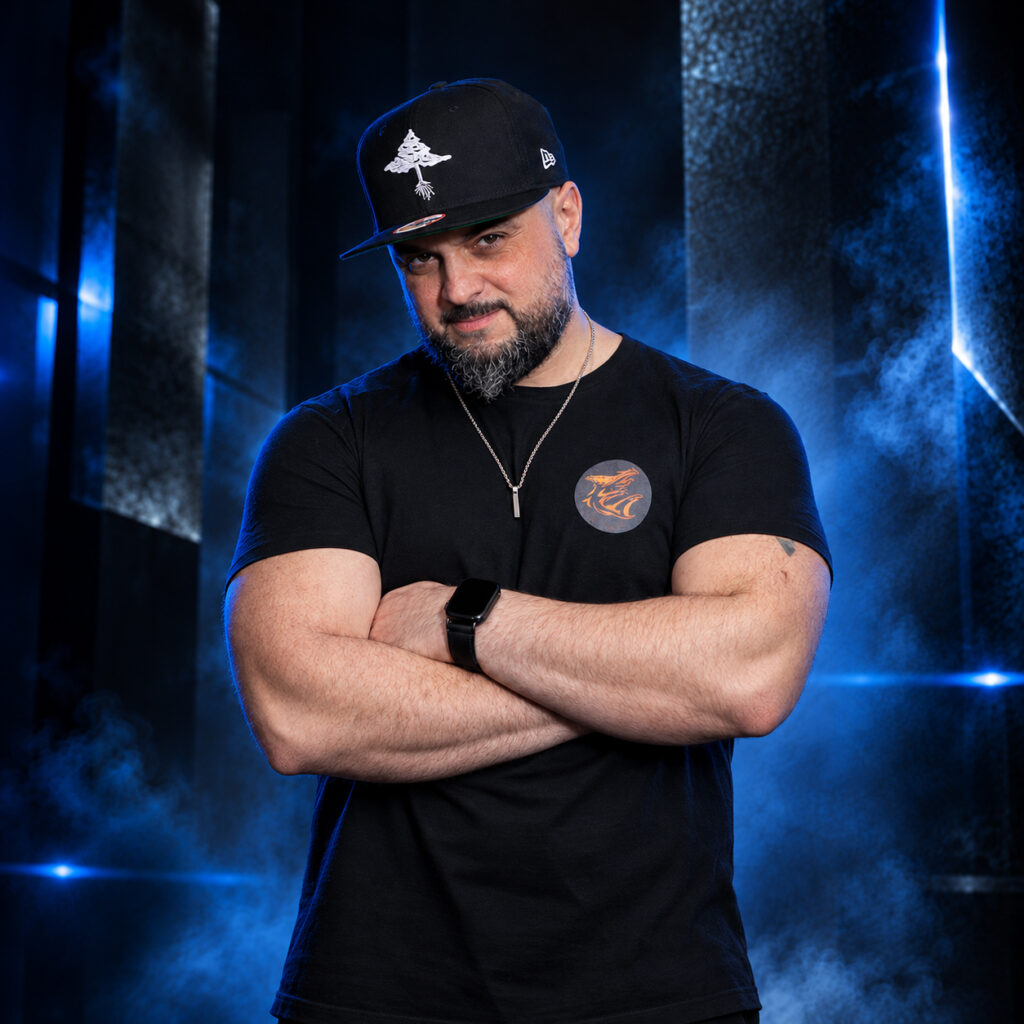
For Cătălin Nedelcu, better known as Shar-K, the musical journey began in Bucharest, surrounded by Hip Hop and House, before evolving through the city’s underground parties, where he discovered his passion for Deep House.
Born in July 1982, Shar-K taught himself how to DJ as he approached his thirties, transforming his love for discovering music into a creative journey of his own.
Six years spent DJing in crew clubs aboard cruise ships and at poolside parties helped shape his signature funky and soulful sound. After returning to Bucharest, he continued building his reputation through club residencies and bookings, eventually expanding into music production and radio.
His discography includes releases on labels such as deeperdub, GNTLMN, Quanticman Records and Black Turtle Deep, while internationally respected artists including Richie Hawtin, Paco Osuna, Stacey Pullen and Claude VonStroke have supported his music.
Beyond genres, releases and performances, one statement from his press kit perfectly captures his philosophy:
“ONE UNIVERSAL RELIGION. THAT SHOULD BE LOVE.”
As we welcome Shar-K to the Five FM family, we invited him to join us for a new edition of FIVE TALKS, exploring the experiences, musical influences and personal stories behind the artist.
1. How did the name Shar-K come about, and what does it represent about you as an artist?
My artist name started taking shape when I was in seventh or eighth grade. During a school break, two friends told me I looked like a shark when I laughed because of my crooked teeth. From that moment on, everyone started calling me “Rechinu'” — Romanian for “the little shark.”
When I started DJing, I wanted my musical alter ego to be something familiar but also a little unique. So I gave my childhood nickname an English twist, making it sound a bit different.
As an artist, Shar-K simply represents my willingness to dive fearlessly into different genres and subgenres, sharing my musical vibes with anyone who wants to listen to my sets.
2. “One universal religion. That should be love.” What does this message mean to you, and how does it influence the music you produce and select?
It means I do all of this out of love — love for music, for connecting with people and for sharing experiences.
Love is universal. It resonates on a frequency that can bring us all together, regardless of who we are or where we come from.
3. You grew up listening to Hip Hop and House. Which artists or albums shaped your musical taste, and how do those early influences appear in your sound today?
First and foremost, I was influenced by MTV and Atomic during the 1990s, along with pretty much every Romanian and international artist I discovered through those channels.
I couldn’t name just one or a handful of artists because there were so many musicians and bands that contributed to my musical education.
The underground radio stations of the 1990s and early 2000s also played an important role.
4. How did you discover Deep House through Bucharest’s underground parties? Do you remember a particular night that changed the way you experienced music?
One evening, a good friend took me to a party in Bucharest called [a:rpia:r], somewhere around Tineretului Park, if I remember correctly.
From that night onward, I became a regular at Kristal Floreasca and Studio Martin.
Before that, I used to go out with my childhood friends as often as possible to local discos around Periș, Snagov and Ciolpani.
But after that particular night, I started traveling to Bucharest on weekends specifically for parties, in addition to my regular weekday commute for university or work.
5. You taught yourself how to DJ as you approached your thirties. What inspired you to take that step, and what were your first months of learning like?
I was digging for music long before I ever thought about learning how to DJ.
I was constantly searching for new tracks or older, really dope records and sending them to my DJ friends. It made me happy whenever I heard those tracks in their podcast mixes, radio shows or even in the clubs I visited.
I started learning to mix using a mouse and Traktor before leaving to work on cruise ships. I continued practicing onboard, connecting my laptop to one of the channels on the mixer.
Eventually, I realized just how much I still had to learn, so I started seriously studying YouTube tutorials on Pioneer CDJs and mixers.
Later, I bought a Traktor X1 and Z1 and spent countless hours learning beatmatching, phrasing and harmonic mixing.
I think it took quite a bit longer than just a few months before I became reasonably decent at it!
6. How did you end up DJing aboard cruise ships, and what expectations did you have when you first started?
I originally ended up working on cruise ships as a casino croupier and dealer.
When I noticed that the crew bar had a DJ booth and that almost anyone could have a go at mixing, I started taking advantage of the opportunity.
Whenever we stopped at ports I had already visited, I would spend hours practicing behind the decks.
My only expectation was that nobody would throw me overboard because they were tired of hearing me mix Deep House, Minimal, Tech, Funky and other styles, while everyone else was used to hearing the same songs night after night, year after year!
7. You spent six years DJing in crew clubs and at pool parties. How did those experiences shape your funky and soulful musical style?
The experiences that shaped my style the most were the moments spent with colleagues from all corners of the world.
We would share our favorite tracks with each other, listen together and learn about one another’s cultures.
That exchange of music and cultural influences had a major impact on my musical taste.
8. What is your most unforgettable memory from a party at sea? Tell us about the location, the people and the music.
The parties that left the strongest impression on me were those held on beaches in the Caribbean, New Caledonia and, generally speaking, on beautiful islands in places where the sun always seemed to shine.
9. What was it like returning to Bucharest and trying to establish yourself in the local music scene? What opportunities came from your first residencies and bookings?
Well, this might not be what you’d expect — or perhaps it’s exactly what you’d expect.
A lot of people rejected me or simply turned their backs on me, including some so-called friends who organized events at very well-known venues.
The reason was simple: I didn’t play exclusively Romanian Minimal, and I wasn’t — and still am not — a major name on the local scene who could guarantee hundreds of people buying tickets and spending money at the bar.
Unfortunately, this attitude still exists in many venues today.
Most of the events I played came either from winning DJ competitions or from personally approaching dozens, perhaps even hundreds, of venues over the years.
Some people gave me opportunities because they genuinely loved different styles of music and wanted to organize interesting events.
Others, unfortunately, simply wanted to take advantage of someone at the beginning of their journey, expecting them to play for free or for very little money.
But along the way, I also met some wonderful people who supported me then and continue to stand by me today. I’m truly grateful for them.
10. You’ve performed in a wide range of venues and settings, from Therme and Grădina Buftea to art and fashion events. How do you adapt your music selection to each environment?
First, I ask the organizers whether they have a preferred musical direction or whether they already know what works best for that particular venue.
If they don’t have a specific preference, I start mixing a little bit of everything and pay attention to the feedback I get from the audience.
11. Your selections range from Nu Disco, Funk & Soul and Hip Hop to Tech House, Techno and Progressive. What do you look for in a track, regardless of genre?
I look for tracks that resonate with me — music that makes me smile and nod my head.
When I find those tracks, I try to make room for them in my sets.
12. How did you get started in music production, and what did you want to express through your first tracks?
I started producing music after several experienced people in the industry encouraged me to do so.
They all seemed to agree on one thing: “If you don’t produce your own music, nobody will take you seriously.”
So once again, I turned to YouTube tutorials and started learning how to produce.
I can’t really say I was trying to express anything specific through my first tracks.
But if I had to choose one thing, it would once again be the vibe. I wanted to create music that delivered a good feeling — or at least that’s what I was trying to achieve.
13. You’ve released music on labels such as deeperdub, GNTLMN, CDj Records and Quanticman Records. How do you find the right label for a track, and what matters most in these collaborations?
The releases I’ve had on different labels came through recommendations and connections with genuinely good people.
They were people who wanted to help, and I’m very thankful to all of them.
14. Artists such as Richie Hawtin, Paco Osuna, Stacey Pullen and Claude VonStroke have supported your music. What was it like discovering that established names were listening to your productions?
I would receive feedback from the labels preparing to release my music.
They had well-known DJs in their promotional pools, so they would send them unreleased tracks in advance.
Like anyone at the beginning of their journey — and probably even later in their career — I was genuinely happy whenever I saw that someone had downloaded a track from my EP and left a few words of appreciation.
15. How do your roles as a DJ and producer influence each other? Have you ever changed a track after testing it on the dancefloor?
When I started producing music, I began listening to every track I played from a completely different perspective.
However, I didn’t continue producing for very long because I enjoy selecting and mixing music much more than spending entire days listening to hi-hats, kicks, shakers and all the other individual elements of a production.
Still, going through that process helped me understand just how much work goes into creating a track.
I have enormous respect for the people who have the patience and talent to produce music.
16. You’ve appeared on radio stations in numerous countries. How do you approach creating a radio mix, and what creative freedom does the format give you?
Once again, it depends on the musical genres played by the radio station.
If there are specific requirements, I adapt to them.
If there are no restrictions, I simply follow whatever sounds right in my ears before pressing that first CUE button.
17. Your projects include “Day Dreaming,” “We Be Clubbin’,” “Just Vibin’” and “History of Tech House.” What makes each of them unique, and how do you select the music?
Day Dreaming is the radio show closest to my heart.
I started it during the pandemic on a Romanian radio station that unfortunately no longer exists.
Day Dreaming was originally designed as a guest-focused radio show. The first hour featured a guest DJ’s mix, while in the second hour I would mix in a similar musical style.
Of course, I didn’t always manage to match the guest’s style perfectly!
The musical directions were incredibly diverse, ranging from Nu Disco and Funky House to Afro, Progressive, Melodic and Soulful sounds.
Before that, I had spent several years collaborating with a radio station in the United States, where I worked as both station manager and resident DJ.
We had shows almost every day, which constantly pushed me to mix, practice and improve.
We Be Clubbin’ first appeared on another American radio station. Later, I brought the concept back at Radio DEEA, where it ran for approximately two years.
It originally focused on Minimal and Deep Tech but gradually expanded into a wider variety of genres and subgenres.
Through that show, I met many wonderful people whom I’m grateful to now call friends.
History of Tech House began as a series of recordings at DJ Superstore during their #BookTheBooth sessions.
It later evolved into YouTube livestreams and prerecorded sessions in different locations, focusing mainly on Tech House and Minimal Deep Tech.
Just Vibin’ is exactly what the name suggests.
I simply follow the vibe, without committing to any particular musical direction.
18. You’ve shared the stage with local and international artists. Has any particular encounter or experience changed your approach to DJing or connecting with an audience?
I’ve always tried to listen to and learn from everyone else’s experiences.
Whenever I discover something useful, I try to apply those lessons to my own work where appropriate.
19. If you had to tell the story of Shar-K through five tracks, either your own or by other artists, which ones would you choose?
There are so many tracks that have marked different stages of my life and continue to do so.
But I’ll share five tracks that I can remember instantly, no matter what time of day or night it is:
- Nu feat. Jo.Ke — Who Loves The Sun
- Chapeau Claque — Last Dance (Enliven Deep Acoustic’s & Kenny Leaven Remix)
- Federleicht — On the Streets (Kollektiv Turmstrasse Mix) (Let Freedom Ring)
- John Creamer & Stephane K — Last Night I Was Dreaming (Gangster Mix)
- DJ Raoul vs. Alina (Jais) — Unde Ești…
20. What’s next for Shar-K, and what would you like to bring to our team through your music and experience?
What’s next? I have absolutely no idea!
If I knew the future, I’d move to Delphi and become an oracle!
But what I would really like is to bring good vibes, learn new things and meet new people.
A Journey Driven by Music, Connection and Good Vibes
Shar-K’s story connects the underground clubs of Bucharest with years spent traveling the world’s oceans, the energy of the dancefloor with the creativity of the studio, and intimate club nights with international radio broadcasts.
It’s a journey shaped by curiosity, musical diversity and meaningful encounters with people from different backgrounds and cultures.
From his earliest experiences discovering underground music to his adventures behind the decks aboard cruise ships, Shar-K has followed a simple philosophy: music should bring people together.
As we welcome him to the Five FM Romania family, we’re looking forward to sharing more of his musical selections, experiences and stories with our international community.
And perhaps the best way to capture his approach to life and music is through the message that has accompanied him throughout his journey:
“ONE UNIVERSAL RELIGION. THAT SHOULD BE LOVE.”
See you in the music. See you on the dancefloor.